
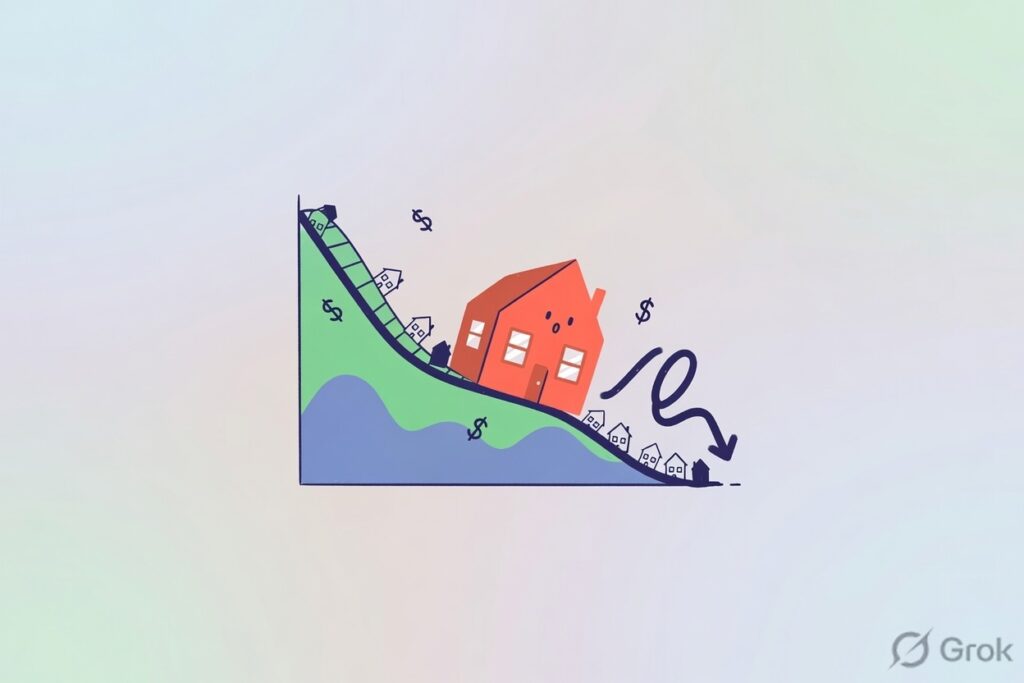
 ⏳ A 30-year property super-cycle that has made Australian homes among the most expensive in the world may finally be coming to an end.
Australia’s housing downturn is spreading across the country, with previously resilient property markets that had recently set record-high prices now experiencing a decline in values. Most experts now believe that instead of sharp increases over the coming decade, property prices are likely to tread water.
A combination of higher interest rates, record-poor affordability, a slowdown in immigration and the federal government’s budget changes to property taxation may have finally ended a cycle that has pushed home prices way above fair value.
Higher Interest Rates
Higher interest rates raise the cost of borrowing for home loans, which reduces buyers’ borrowing capacity and overall affordability. As a result, demand for property falls, fewer sales occur, and price growth typically slows or turns negative. Investors also pull back because higher rates squeeze rental yields and increase holding costs, while some existing owners may be forced to sell if repayments become unsustainable, adding extra supply to a quieter market.
Poor Affordability
Poor affordability means house prices and mortgage repayments have risen faster than incomes, locking many potential buyers (especially first-home buyers) out of the market. With fewer people able to purchase, demand drops, sales volumes slow, and competition among buyers weakens. This typically leads to longer selling times, more price discounts, and softer or negative price growth as the market adjusts to reduced purchasing power.
Slowdown in Immigration
A slowdown in immigration reduces population growth and therefore overall housing demand, as fewer new residents enter the country looking for places to live or invest. With less pressure on both the rental and sales markets, vacancy rates can rise, rental growth softens, and competition among buyers eases. This typically leads to slower sales volumes, longer days on market, and weaker or negative price growth, particularly in cities and suburbs that have relied heavily on migration-driven demand.
Federal Government’s Budget Changes
Recent Federal Budget changes limiting negative gearing on established residential properties (from July 2027) and replacing the 50% capital gains tax discount with a less generous inflation adjusted system have reduced the tax advantages of property investment. This has already dampened investor demand for existing homes, contributing to weaker auction clearance rates, slower sales, and downward pressure on prices—particularly in investor-heavy markets like Sydney and Melbourne—while also creating uncertainty that has further cooled buyer activity across the broader property market.
How we can help
Do these factors change your property plans at all? We’d love to assist any way we can by getting to know you and your needs in order to provide you with the best guidance possible. We have access to information and data that we can use to make better informed decisions. Feel free to contact us anytime to have a chat about anything we may be able to assist..
Disclaimer: The content of this article is general in nature and is presented for informative purposes. It is not intended to constitute financial advice, whether general or personal nor is it intended to imply any recommendation or opinion about a financial product. It does not take into consideration your personal situation and may not be relevant to circumstances. Before taking any action, consider your own particular circumstances and seek professional advice. This content is protected by copyright laws and various other intellectual property laws. It is not to be modified, reproduced or republished without prior written consent.